Home · Services · Ductwork Repair & Replacement
Ductwork Repair & Replacement in Carmel, IN
Quick answer
Leaky or poorly balanced ducts explain many Carmel comfort complaints, especially upstairs rooms that lag behind the rest of a large two-story plan. Sealing, insulating, and correcting undersized returns can recover cooling the equipment already produces instead of dumping it into the attic.
Ductwork Repair & Replacement in Carmel starts with the local read: large two story brick homes across the master planned subdivisions, older ranch and split level stock near the old center, townhome and condo stock in the village centers, and estate homes along the river and creek sides. The Cool Creek side of the service area and the city's cold winters, hot humid summers, and shoulder seasons that swing in a single week set the order of work, and the scope names that order in writing before anyone commits to a price.
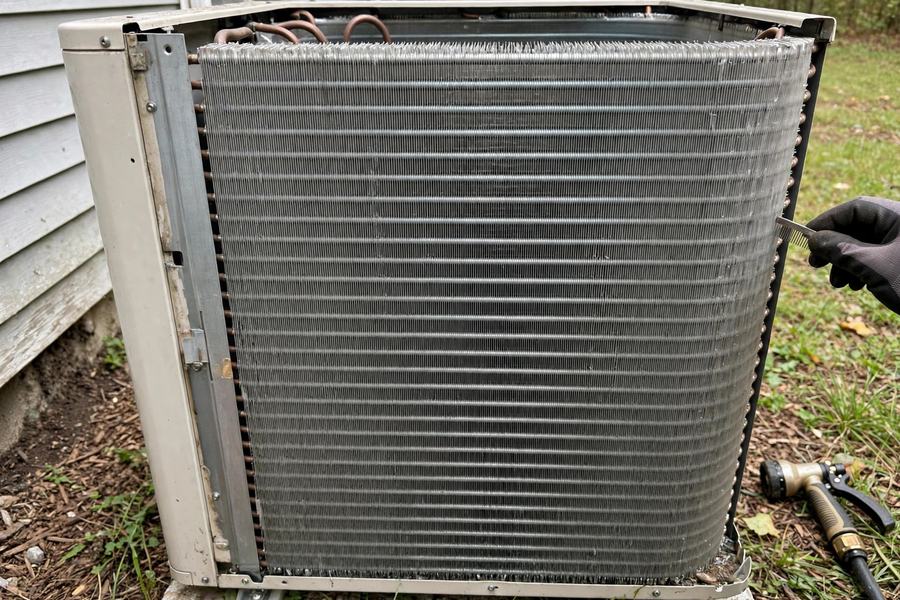
How we approach this job
Diagnosis and insurance documentation: For ductwork repair & replacement in Carmel, the buying situation is a problem with a cause: find the real source, document it with photographs and readings for any claim, and only then price the fix.
Signs you need ductwork repair & replacement
- One or two rooms that never match the rest of the house. It usually means the equipment is fine and the air's road is the failure.
- Conditioned air pouring into an attic or crawl space from a separated run. It usually means one zone's comfort problem is a distribution problem, not a capacity problem.
- Visible collapsed or crushed flex duct in the attic. It usually means leaks are dumping conditioned air into unconditioned space.
- Dust and weak flow at vents far from the air handler. It usually means the far runs are starved or leaking; a pressure and duct read finds where the air is lost.
What the job involves
What affects the price
- How much duct is accessible (attic and crawl access decide labor)
- Repair and sealing versus partial replacement of failed runs
- Insulation condition on attic runs in extreme climates
- Whether registers and returns also need resizing for the fix to hold
When it is an emergency
Duct work is scheduled work with one sharp exception: a fully separated supply run in extreme weather can take a room or a zone out of service entirely, and that is a call today. Otherwise this is the highest value planned work in HVAC, because it fixes the complaint people usually blame on the equipment.
PLACEHOLDERDuctwork Repair & Replacement across the Carmel area
Related services
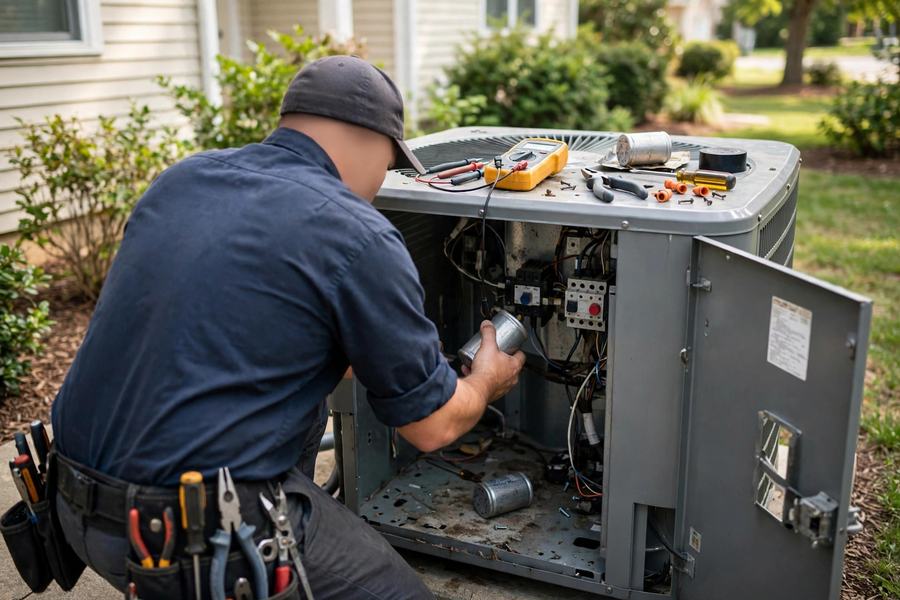
AC Repair
When a Carmel system runs all afternoon without holding temperature, the cause often hides in airflow, a tired capacitor, or refrigerant lost through a slow leak. Two-story brick homes in the master-planned subdivisions make weak cooling obvious upstairs long before the main floor complains.
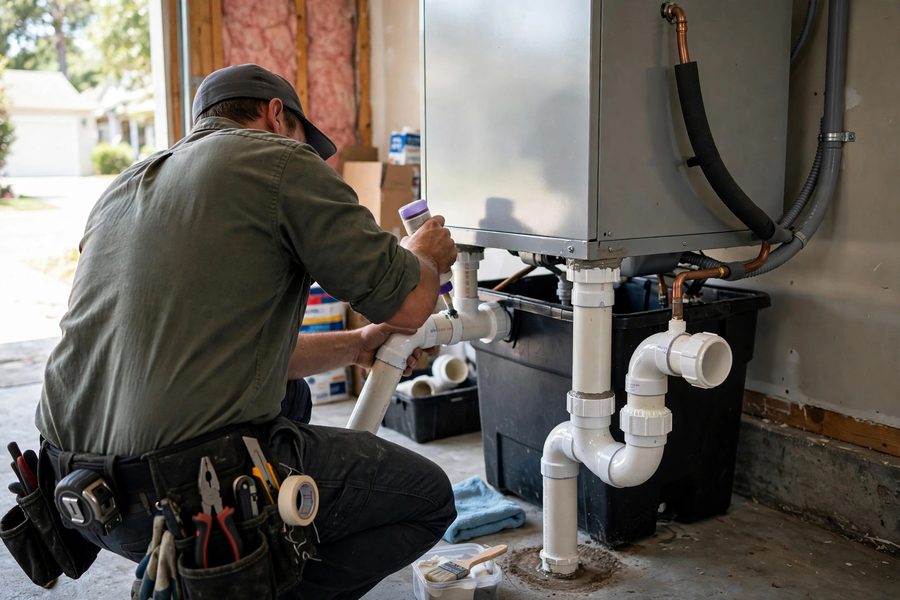
HVAC System Replacement
Replacement in Carmel should start with a load calculation matched to the actual house, not a like-for-like swap of whatever was installed when the subdivision was built. Ranch homes near the old center, creek-side estates, and large two-story plans each land at different sizes and duct needs.
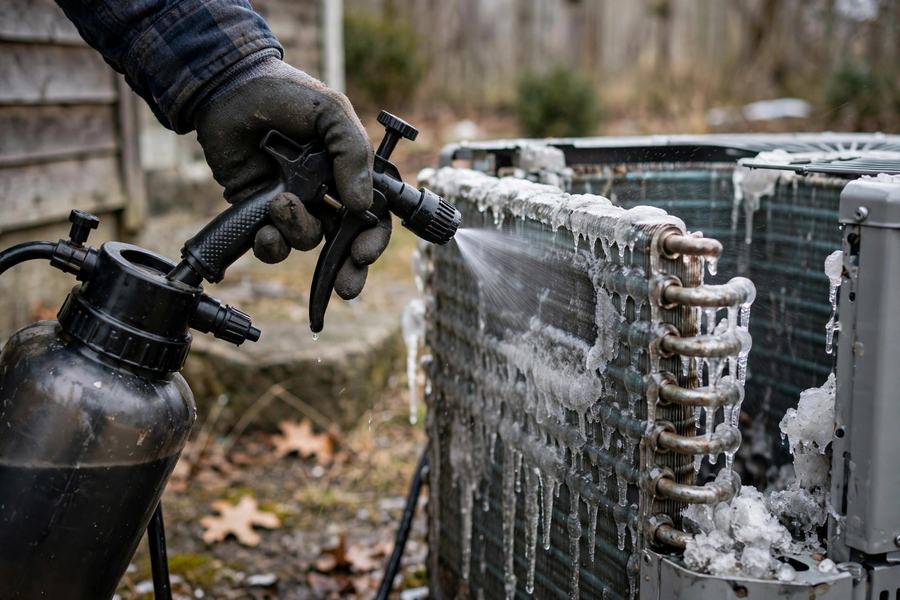
Heat Pump Repair & Installation
Heat pumps suit Hamilton County well for much of the year, paired in many homes with backup heat for the coldest weeks. Service visits check defrost behavior, refrigerant charge, and how often auxiliary heat runs, since that last item shows up quickly on winter bills.
Furnace & Heating Repair
Cold Carmel winters give gas furnaces real work, unlike mild-climate units that sit idle for months. Igniters, flame sensors filmed with oxide, and inducer motors account for most no-heat calls, and each of those findings is a part-level repair rather than a new system.
Ductwork Repair & Replacement questions, answered
When is ductwork repair & replacement an emergency?
Duct work is scheduled work with one sharp exception: a fully separated supply run in extreme weather can take a room or a zone out of service entirely, and that is a call today. Otherwise this is the highest value planned work in HVAC, because it fixes the complaint people usually blame on the equipment.
What affects the price of ductwork repair & replacement in Carmel?
The main price factors for ductwork repair & replacement are covered in the cost section above. The contractor confirms the exact price in a written estimate after seeing the job, and nothing is owed until you approve it. The call and the referral are free.
How often should HVAC be serviced, and when?
Plan one visit per function each year: cooling before humid summer weather settles in, heating before cold weather does, so most Carmel homes need one or two visits annually. The work that counts is basic: coils cleaned, condensate drain flushed so it cannot flood a ceiling, electrical components measured, and heating safety controls tested. Booking during shoulder seasons, when Hamilton County weather can swing within a single week, avoids the queue that forms after the first failure wave.
Does homeowners insurance cover HVAC damage in Carmel?
Insurance covers HVAC harm only when a covered event causes it. Wear, age, and ordinary mechanical failure count as maintenance everywhere and are not covered. Lightning or a storm-related power surge, plus fire or storm damage to equipment, are the covered kinds, subject to your deductible, and they need documentation: storm date, surge evidence, and a technician's finding linking failure to that event. A compressor dying of age during storm week in Carmel is still age unless electrical evidence says otherwise.
My heat pump blows air that feels cold in heat mode. Is it broken?
That sensation alone does not prove a fault. Heat pumps supply air around 90 to 100 degrees, cooler than skin, so it feels cool against your hand while still warming the house; furnaces deliver hotter air in shorter bursts by contrast. Better tests are whether the house holds its set point on a cold Carmel night, whether outdoor ice clears during defrost, and whether auxiliary heat runs constantly, which your electric bill will notice. Drifting temperatures or a unit that stays iced over do warrant a service call.
Request a callback
Prefer to talk later? Leave your details and an independent local pro will call you back. No charge to you, no obligation.
Cool Creek Air is a free referral service. Submitting this form connects you with independent local contractors who provide the work.